
"Solar Paint" that Could Add 7,456 Miles of EV Range
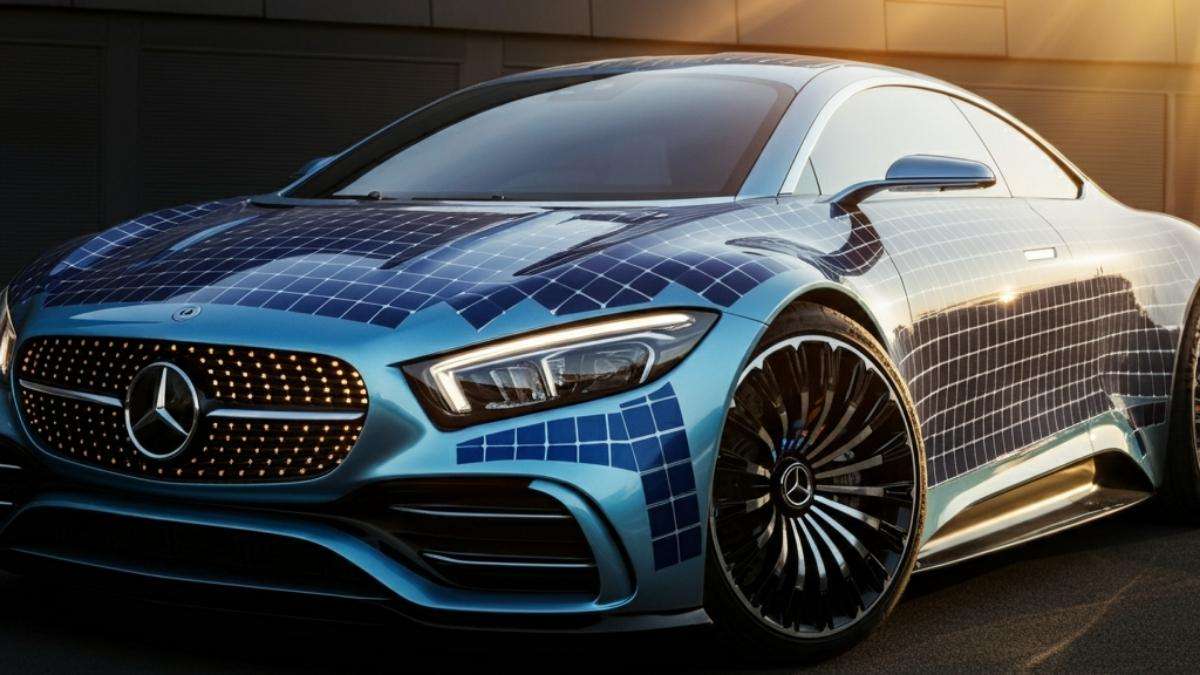
Photo: Mercedes bennz group
Mercedes-Benz Is Exploring Solar Paint That Could Help Charge Electric Cars
Imagine parking your electric car in the sun and returning to find it has collected enough energy for part of your next journey. That’s the idea behind a solar coating being researched by Mercedes-Benz.
The German carmaker is developing a thin layer of photovoltaic material that could be applied to an electric vehicle’s bodywork. Like a solar panel on a roof, the material is designed to capture sunlight and convert it into electricity. That energy could be used to power the car or charge its battery—even when the vehicle is parked and switched off.
How much extra range could it provide?
Mercedes-Benz estimates that a vehicle with 11 square metres of solar-coated surface—roughly the exterior area of a mid-sized SUV—could generate enough electricity for up to 12,000 kilometres of driving per year under ideal conditions.
That figure is a best-case estimate, not a guaranteed amount of extra range. The electricity generated would depend on factors such as the weather, where the car is parked, how much sunlight reaches its surfaces and how efficiently the vehicle uses energy.
A car left outside in the sun may collect more energy than one kept in an undercover car park. Even in sunny Australia, drivers would still need to consider their location, daily travel distance and access to sunlight.
Thinner than a human hair
The solar modules Mercedes-Benz is researching are just five micrometres thick and weigh approximately 50 grams per square metre. The company says the cells have an efficiency of around 20% and is exploring how to apply them across vehicle panels with different shapes and angles.
Mercedes-Benz also says the material contains no silicon or rare-earth elements and is designed to be recyclable.
Could solar paint replace charging?
For most drivers, solar paint would be better viewed as a supplement to regular charging. If the technology works as intended, it could add useful energy throughout the day and help reduce how often a vehicle needs to be plugged in. How much difference it makes would vary considerably from one driver to another.
The idea has already appeared in a concept vehicle. In 2025, Mercedes-Benz presented its Vision Iconic show car with solar paint among the technologies it was exploring. The technology remains a research concept, so it should not be treated as a feature currently available on everyday Mercedes-Benz electric cars.
For electric vehicle owners, the appeal is easy to understand: a car that can collect some of its own energy while parked could make daily driving a little more convenient. Whether solar paint becomes practical and affordable for production cars is something we’ll have to wait and see.